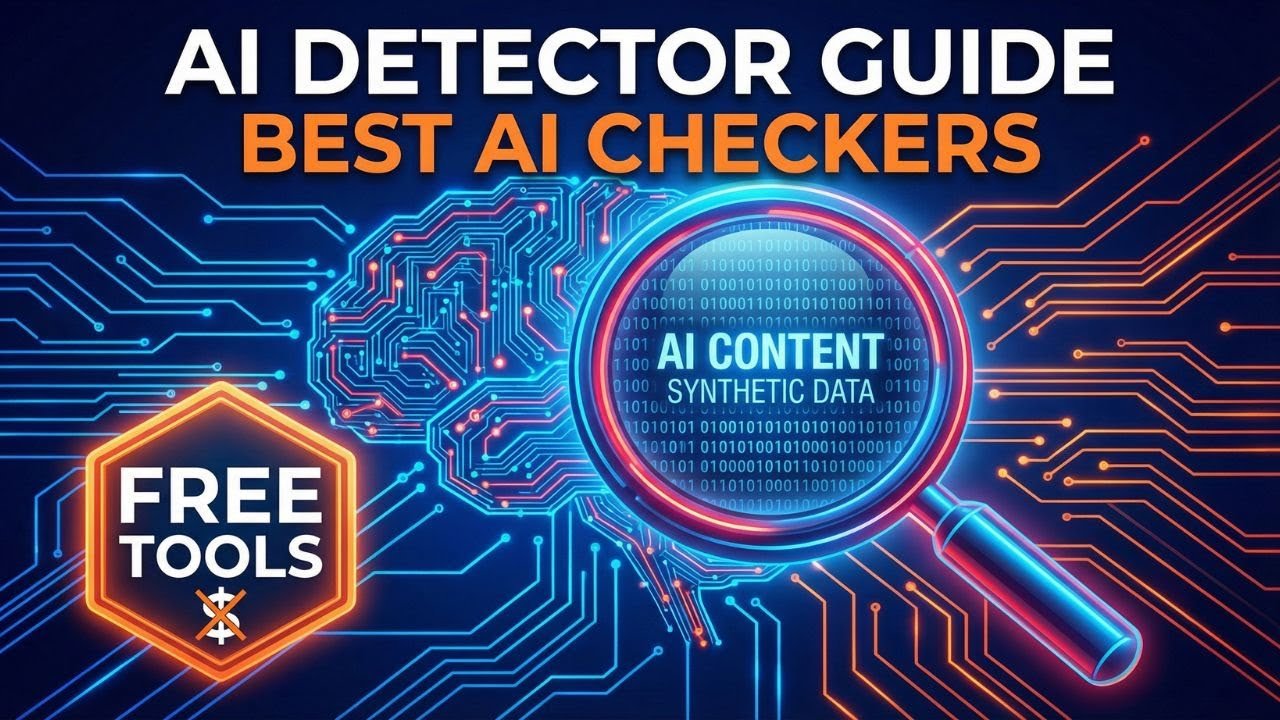
Artificial intelligence has changed how people write blogs, essays, emails, and website content. Tools like ChatGPT can create text within seconds. However, readers, teachers, editors, and website owners often want to know whether content comes from AI or a human writer. This is where an AI detection tool can help.
Finding the best ai detector free option can save time and help you review your writing. These tools examine text patterns and estimate whether artificial intelligence may have produced the content. Some also provide sentence-level highlights and feedback about writing style.
However, no detector can identify AI writing perfectly. Human writing may receive an AI score, and AI-written text may pass undetected. Therefore, you should treat detection results as clues rather than final proof. This guide explains useful free tools, their features, limitations, and practical ways to check content responsibly.
What Is an AI Detector?
An AI detector is an online tool that estimates whether a piece of text was written by a person or generated by artificial intelligence. It studies patterns in sentences, word choices, and the overall structure of writing. Some tools also examine how predictable the text appears.
For example, imagine you have written a blog post about healthy eating. You can paste your article into a detector and review its result. The tool might label some sections as likely AI-generated or mostly human-written. Different detectors can produce different results for the same article.
These tools are useful for editors, students, bloggers, and digital marketers. They can support content reviews and help people understand writing patterns. Still, they cannot reliably prove who wrote a document. A good review also considers drafts, research notes, writing history, and the author’s own explanation.
Why Look for the Best AI Detector Free?
Many writers need a quick way to review their content without buying another subscription. A free tool can be a practical starting point for bloggers, students, freelancers, and small businesses. It lets users explore basic detection features before deciding whether paid features are necessary.
The best ai detector free choice depends on your needs. Some tools focus on short text checks, while others support longer documents or detailed sentence highlights. Certain platforms also combine AI detection with grammar checking and writing feedback. Free plans may limit word counts, daily scans, or access to advanced reports.
Before choosing a tool, check its current free limits and privacy policy. Avoid uploading confidential documents to services you do not trust. Most importantly, compare results instead of relying on one score. A free detector is most useful when it supports careful editing rather than replacing human judgment.
Top Free AI Detector Tools to Consider
Several established platforms offer AI detection features, although their free access and capabilities can change. The following options are worth exploring. Check each provider’s current terms before using it for important work.
GPTZero focuses on identifying text that may have been generated by AI. It can be useful for educators, students, and writers reviewing longer passages. Depending on the available plan, users may access text highlighting and document-level analysis.
ZeroGPT offers a straightforward way to submit text for an AI detection estimate. Its simple interface can appeal to people who want a quick check without a complicated setup. Review its word limits and privacy terms before uploading documents.
QuillBot provides writing tools and an AI detection feature. It may suit users who want to review text while working on grammar, clarity, and sentence flow. Remember that editing features and AI detection answer different questions.
Scribbr offers an AI detection tool designed for people reviewing written work. Students and academic writers may find it useful for an initial check. Its results should not replace academic rules, instructor guidance, or a careful review of the writing process.
Sapling offers an AI text detector alongside writing assistance features. It can help users examine text patterns and review content. Check whether the current version supports your desired text length and whether its free usage limits fit your workflow.
No single platform is best for every writer. Test two or three options with the same sample before selecting one. Compare their explanations, ease of use, privacy practices, and free limits instead of choosing solely by the percentage displayed.
How Does an AI Text Detector Work?
An AI detector uses statistical patterns and language analysis to estimate how text may have been produced. Some systems examine how predictable words and phrases are. Others use machine learning models trained on examples of human-written and AI-generated text.
A detector might notice repeated sentence structures, similar paragraph lengths, or highly predictable word choices. However, these features also appear in ordinary human writing. A person writing a formal report may use simple, regular sentences throughout the document. That does not mean the person used AI.
Different detectors use different methods and training data. As a result, their predictions may not agree. New AI models and changes in writing style can also affect results. This is why detection technology should be viewed as an estimate rather than a reliable method of proving authorship.
Best AI Detector Free for Students
Students may want to review assignments before submitting them. A free detector can provide an additional perspective on writing, especially when students have used AI tools for brainstorming or editing. However, each school or university may have different rules about acceptable AI assistance.
The best ai detector free option for a student should be easy to use and clear about its limitations. GPTZero, Scribbr, and QuillBot are possible starting points. Check their current free features and avoid assuming that any one tool predicts how an instructor will evaluate your work.
The safest approach is to keep your work transparent. Save outlines, notes, research sources, and earlier drafts. Follow your institution’s rules for AI assistance and citations. If a detector labels your original writing as AI-generated, these records can help explain your process. Do not rewrite good work simply to satisfy an uncertain detection score.
Best Free AI Detector for Bloggers and SEO Writers
Bloggers and SEO writers create articles, product descriptions, landing pages, and other online content. They may use AI tools to brainstorm ideas or organize information. An AI detector can be one part of their editing process, but it should not become the main measure of quality.
When selecting a detector, consider whether it handles long articles, highlights specific passages, and explains its findings. You should also review readability, factual accuracy, originality, and the usefulness of your content. These factors matter more to readers than an isolated detection percentage.
Google’s content guidance emphasizes helpful, reliable, people-first content. Using AI does not automatically make an article valuable or poor. The important questions concern accuracy, originality, purpose, and usefulness. Add your own expertise, examples, careful research, and practical advice. A detector may support your review, but it cannot determine whether your article genuinely helps its audience.
Best AI Detector Free for Essays
Essay writers often need clear feedback before submitting their work. A detector may help them examine writing patterns, but it cannot reliably distinguish every human-written essay from AI-generated text. Formal academic writing can sometimes look predictable, even when a student wrote every sentence independently.
For essay checks, choose a tool that gives understandable feedback rather than only a single percentage. Review the highlighted sections and ask whether they reflect your normal writing style. Compare the result with your outlines, notes, source materials, and earlier drafts.
If you used an AI assistant, follow your teacher’s instructions about permitted use and disclosure. Do not assume that changing words until a detector gives a lower score makes an essay better. Focus on explaining ideas clearly, citing sources correctly, and showing your own understanding. A well-supported essay is more valuable than one written merely to influence a detection tool.
How Accurate Are Free AI Detectors?
AI detection accuracy varies across tools, text types, languages, and writing styles. Some detectors perform better on certain samples than others. A result from one platform may not match the result from another platform, even when both examine exactly the same text.
False positives are a major concern. A false positive occurs when a detector labels human-written text as AI-generated. False negatives can also happen when AI-generated text receives a human-written classification. Short passages, heavily edited text, formulaic writing, and unusual language patterns may make interpretation more difficult.
For this reason, the best ai detector free tool should be treated as a screening aid, not a final judge. Avoid using one score as the sole reason for accusing someone of misconduct. If a result matters, seek more context and independent evidence. Responsible decisions require human review, especially in education, employment, and professional publishing.
Free AI Detector vs. Paid AI Detector
Free and paid detectors may offer similar basic checks, but their available features can differ. A free plan may restrict the number of scans, the amount of text, or access to detailed reports. Paid plans may offer larger limits, document uploads, team features, or additional writing tools.
| Feature | Free detector | Paid detector |
| Basic text scanning | Often available | Usually available |
| Daily usage | May be limited | Often higher limits |
| Long documents | May have restrictions | May support longer files |
| Detailed reports | Depends on the provider | May include more detail |
| Team features | Often limited | May be available |
| Detection certainty | Not guaranteed | Not guaranteed |
Paying for a detector does not guarantee correct results. Consider a paid plan only when you need its extra features regularly. For occasional blog or essay checks, a free version may be enough. Always confirm the current pricing, usage limits, and data policies directly with the provider.
How to Use a Free AI Detector Step by Step
Using an online detector is usually simple. You do not need advanced technical skills to perform a basic text check. The main task is to interpret the result carefully instead of treating it as a final answer.
- Choose a tool: Visit a detector’s official website and review its terms.
- Prepare your text: Copy the passage you want to examine.
- Paste or upload it: Follow the website’s instructions and text limits.
- Start the scan: Wait for the detector to process your content.
- Read the result: Check highlighted sections and any explanation provided.
- Review the writing: Look for factual errors, repeated ideas, and unclear sentences.
- Compare carefully: If necessary, use another detector and examine differences.
- Keep useful records: Save drafts and notes when authorship may need explanation.
Do not upload sensitive or private information unless you understand how the service handles it. If the result conflicts with your knowledge of the writing process, investigate further instead of immediately changing the text. A detector should support thoughtful editing, not control every writing decision.
Can AI Detectors Identify ChatGPT Content?
Some AI detectors are designed to estimate whether text resembles output from systems such as ChatGPT. They may recognize patterns found in certain AI-generated samples. However, these patterns are not unique to one product, and detection results are not guaranteed to identify the tool that produced a passage.
For example, a human writer may use short sentences, common words, and a clear structure. An AI system may produce similar features. If the writer edits an AI-generated draft, the text may become even harder to classify. Likewise, a detector may flag a human-written passage because its style resembles the examples used during training.
Therefore, a detector cannot reliably prove that ChatGPT created a specific document. It also cannot establish whether someone used AI for research, editing, translation, or complete drafting. When authorship matters, review available evidence and applicable rules. Treat detector output as one limited source of information.
AI Detector for Images and Other Media
Text detectors are not designed to verify every kind of digital content. An AI image detector examines images, while an AI voice detector may analyze audio. These tools use different methods because pictures, speech, and written language contain different signals.
An image detector may look for visual patterns associated with generated pictures. An audio detector may examine speech characteristics or other clues. Yet both face similar problems with accuracy. Editing, compression, background noise, and new generation methods can affect results. A single tool may also struggle with content created using unfamiliar systems.
If you need to check a picture or recording, choose a tool specifically designed for that media type. Consider image metadata, original files, source history, and trustworthy context where available. No detector should be treated as definitive proof without additional evidence. The same careful approach applies whether you are reviewing text, photographs, or audio recordings.
Common Mistakes to Avoid When Checking AI Content
One common mistake is trusting a detector’s percentage without understanding what it means. A result of 70% does not necessarily mean that exactly 70% of the words came from AI. Different services may define and report their scores differently, so read their explanations before drawing conclusions.
Another mistake is checking only a tiny passage and applying the result to an entire article. Short samples may provide less useful context. It is also unwise to keep rewriting sentences solely to obtain a preferred score. This can damage clarity, introduce errors, and make the writing less natural.
Finally, avoid treating a detector as an originality checker. AI detection and plagiarism detection are different tasks. A passage can be human-written but copied from another source. AI-generated content can also contain original wording while presenting false information. Review sources, verify facts, and edit for readers. These steps provide a stronger content review than relying on one automated score.
Key Features to Compare Before Choosing a Tool
Choosing a detector becomes easier when you compare practical features rather than marketing claims. Start with ease of use. A clear interface can help you understand results without wasting time. Next, check supported languages, maximum text length, and whether the tool explains its findings.
Privacy is equally important. Read the provider’s policy to learn whether submitted text may be stored, reviewed, or used to improve its services. Avoid submitting confidential client documents, private messages, or unpublished sensitive material without suitable protections. Free access should not come at the expense of your data.
Also consider how the service handles uncertainty. Helpful explanations and highlighted passages may be more useful than a bold percentage without context. Look for clear documentation about limitations. The best tool for your needs is one that fits your workflow, protects your information, and encourages careful review instead of promising perfect detection.
Is the Best AI Detector Free Enough for Professional Use?
A free detector may be sufficient for occasional checks, personal blogs, or small writing projects. However, professionals who review many documents may need longer text limits, saved reports, team access, or stronger privacy controls. Those needs depend on the type and amount of work involved.
Before adopting a tool for business use, test it on varied samples. Include known human-written text and AI-generated examples from different sources. Compare results and record where the detector struggles. This small evaluation can help you understand whether the service is useful for your particular workflow.
Even with testing, do not use detector scores as the only basis for important decisions. Professional review should include factual checks, source verification, writing quality, and appropriate human oversight. A free service can be helpful, but its value depends on how responsibly you use it. Choose based on evidence, not bold claims about perfect accuracy.
Quick Tips for Getting Better Results
You can make your content review more useful by following a few simple habits. First, examine a meaningful passage rather than drawing conclusions from a few words. Second, use the same text when comparing multiple detectors. This makes differences between their results easier to understand.
Third, read the highlighted sections yourself. Ask whether the language is clear, accurate, and consistent with the author’s usual style. Fourth, keep drafts and notes when you need to show how a document developed. Finally, remember that a low AI score does not prove originality, and a high score does not prove misconduct.
The best ai detector free choice is one that helps you ask better questions about your writing. Use detection alongside editing, source checks, and human judgment. This balanced method can support better articles, clearer essays, and more responsible publishing decisions without letting an uncertain score control your work.
Frequently Asked Questions
1. What is the best ai detector free tool?
There is no single best option for every user. GPTZero, ZeroGPT, QuillBot, Scribbr, and Sapling are options worth exploring. Compare their current free limits, supported features, privacy policies, and results on the type of content you need to review.
2. Are free AI detectors accurate?
Free AI detectors can provide useful estimates, but their accuracy varies. They may incorrectly flag human writing or miss AI-generated text. Always treat results as clues and consider other evidence before making important decisions about authorship.
3. Can a free AI detector check ChatGPT writing?
Yes, some free detectors are designed to estimate whether text resembles AI-generated writing, including content created with ChatGPT. However, they cannot reliably prove that ChatGPT produced a specific passage or identify the exact tool used.
4. Can Google detect AI-written blog posts?
Google evaluates content using many signals related to quality, relevance, usefulness, and spam policies. Its published guidance focuses on the quality and purpose of content rather than treating AI use alone as a reason for poor rankings. Helpful, original, trustworthy content remains important.
5. Is an AI detector the same as a plagiarism checker?
No. An AI detector estimates whether text may have been generated by artificial intelligence. A plagiarism checker looks for matching or similar material in available sources. These tools address different questions, and neither guarantees that a document is fully accurate or original.
6. Should I rewrite my article if a detector flags it?
Not automatically. First, review the result and consider whether it reflects your writing style. Check the article for unclear wording, repeated ideas, and factual problems. Keep your drafts and research notes, and improve the content for readers rather than changing sentences just to lower a detection score.
Conclusion
Finding the best ai detector free tool can help you review essays, blog posts, and other written content. Options such as GPTZero, ZeroGPT, QuillBot, Scribbr, and Sapling offer different features worth comparing. Their free plans, word limits, and capabilities may change, so check the official websites before choosing one.
Remember that no detector can guarantee perfect results. A score is an estimate, not proof of authorship. Use these tools alongside careful editing, fact-checking, source review, and human judgment. If you are a blogger, student, editor, or website owner, focus on creating clear, original, and useful content.
Start by testing a free tool with a sample you understand well. Compare the result with your own review, and choose the service that best fits your needs. Which AI detector have you tried, and how useful was its feedback? Share your experience to help other readers make an informed choice.